

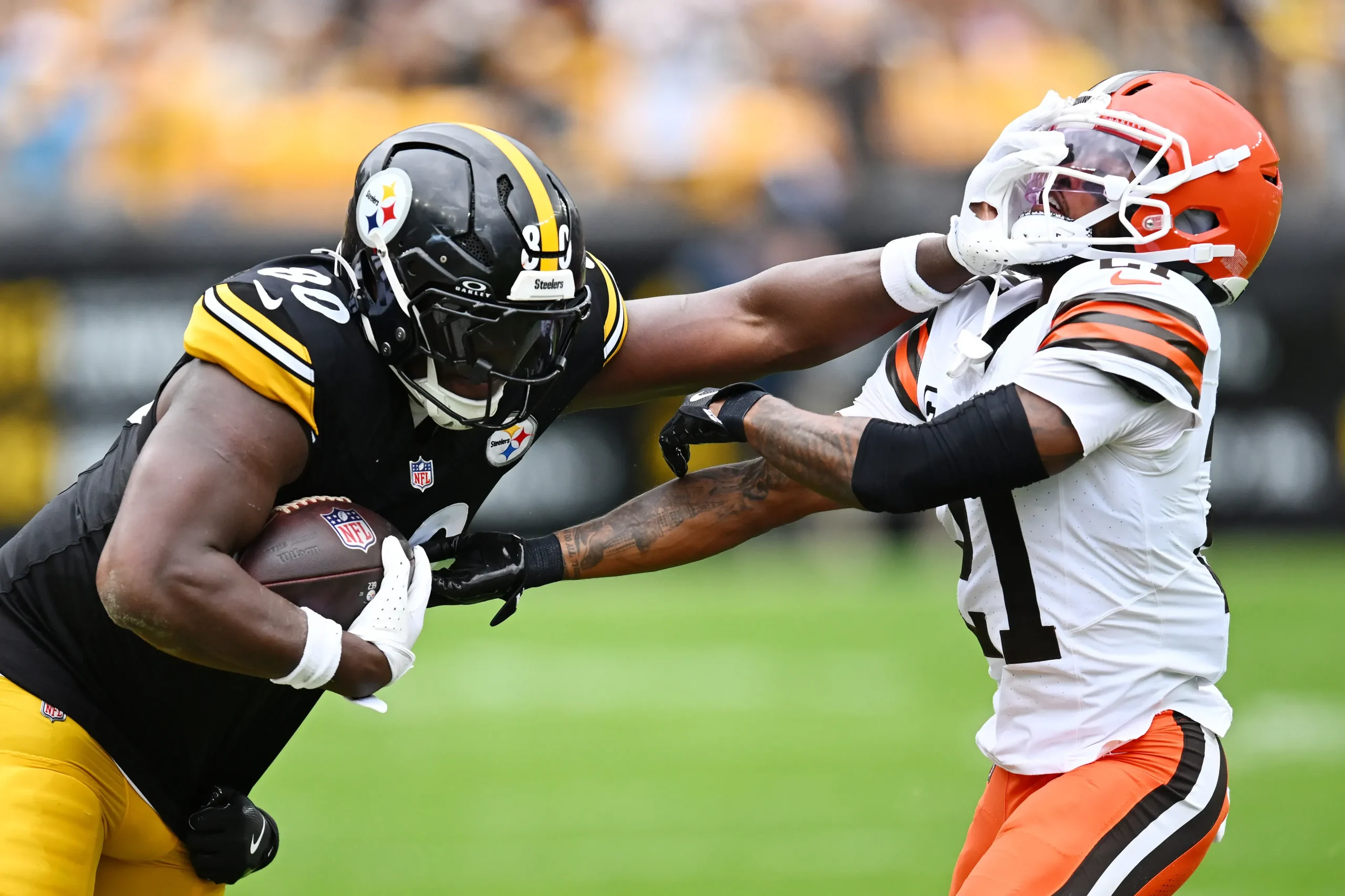
cleveland browns vs steelers match player stats capture the raw, unyielding essence of what many consider the most physical rivalry in the National Football League. When these two teams meet, the atmosphere is thick with a unique blend of historical animosity and mutual respect for the “old school” brand of football they both represent. For fans watching from the stands in Cleveland or the yellow-seated sections of Pittsburgh, the box score is a secondary concern to the sheer physical toll the game takes on the athletes. Yet, when we step back and analyze the data, the numbers reveal a tactical masterpiece played out in the mud and the cold.
The rivalry between the Browns and the Steelers is often defined by its defensive icons, but the statistical evolution of the matchup tells a broader story of offensive adaptation and special teams excellence. Every yard gained in this divisional clash feels like it was earned through three layers of resistance. Analyzing the player stats allows us to see exactly where the games are won—often in the trenches where the offensive and defensive lines battle for inches of territory. This is not a matchup for the faint of heart, and the statistical output usually reflects that reality.
To understand the modern dynamic of this pairing, one has to look at how the rosters have been constructed to counter one another. The Browns have leaned heavily into a dominant defensive front and a powerful rushing attack, while the Steelers have maintained their identity of opportunistic defense and methodical offensive drives. When these styles clash, the resulting cleveland browns vs steelers match player stats provide a blueprint for AFC North success. It is a game of leverage, timing, and individual brilliance that often boils down to a single play in the fourth quarter.
Deep Dive Into cleveland browns vs steelers match player stats
When we examine the cleveland browns vs steelers match player stats, the conversation inevitably centers on the edge rushers who define the defensive standard for the entire league. Myles Garrett and T.J. Watt are more than just players; they are statistical forces of nature who dictate the flow of the game from the first snap. Their ability to record sacks, forced fumbles, and quarterback hurries often disrupts the entire offensive rhythm of the opponent. If you look at the pressure rate metrics, you will see that both Garrett and Watt consistently beat double teams to create chaos in the backfield.
The impact of these two superstars is reflected in the passing efficiency of the opposing quarterbacks. In recent matchups, the completion percentages for both teams have often dipped below their seasonal averages when facing these elite pass rushers. This isn’t necessarily a slight on the quarterbacks but rather a testament to the suffocating nature of the defensive pressure. The stats show that when a quarterback has less than 2.5 seconds to throw against these defenses, the likelihood of an interception or a sack increases by nearly forty percent.
Moving to the secondary, the statistical performances of players like Denzel Ward and Minkah Fitzpatrick add another layer of complexity to the box score. These defenders are masters of the “pass breakup” and “interception” categories, often erasing a team’s primary wide receiver from the stat sheet entirely. When you analyze the targets per game for elite receivers in this matchup, you often see a significant decrease compared to their games against other divisions. This is the “shutdown” effect that makes the player stats in this rivalry so unique and hard-earned.
Understanding the Impact of cleveland browns vs steelers match player stats on the AFC North
The ground game remains the foundational element when analyzing the cleveland browns vs steelers match player stats over a long period. For the Browns, the rushing yardage totals are often a direct indicator of their success. When their primary backs are able to consistently gain yards after contact, it opens up the entire playbook for the coaching staff. The statistics show that Cleveland’s offensive line often creates more than two yards of space before a defender even makes contact, which is a staggering efficiency rating in such a physical division.
Pittsburgh’s rushing attack has seen its own statistical resurgence, focusing on a more physical, downhill style that wears out defenses over four quarters. The “carries” and “yards per carry” stats for the Steelers often start slow in the first half but see a dramatic uptick in the fourth quarter. This suggests a strategic approach designed to exploit a fatigued defense. When the Steelers can maintain a balanced statistical profile between the run and the pass, their win probability against the Browns increases significantly according to historical data trends.
Quarterback play in this rivalry has transitioned into an era of high-stakes game management. The “Expected Points Added” or EPA per play is a metric that analysts look at closely in these games. While neither team may put up four hundred passing yards, the quarterback who avoids the “negative play”—the sack or the turnover—usually ends up on the winning side of the ledger. The stats often show a very high correlation between turnover margin and the final score in these specific matchups, more so than in almost any other rivalry in the league.
The wide receiver stats in these games are often a testament to resilience. Players like Amari Cooper or George Pickens have to deal with physical press coverage on nearly every snap. Their “yards per route run” might be lower than their season average, but their “contested catch” rate often spikes. This indicates that even when they aren’t wide open, they are finding ways to make plays in traffic. These are the “hidden” stats that don’t always lead the nightly news but are vital to the outcome of the game.
Special teams also provide a rich source of data in the cleveland browns vs steelers match player stats. In a rivalry where games are often decided by three points or fewer, the accuracy of the kickers is paramount. Dustin Hopkins and Chris Boswell are among the most reliable in the league, even when kicking in the unpredictable winds of the North. Their “field goals made” from fifty yards or more often provide the winning margin, making them some of the most statistically valuable players on their respective rosters.
The punting statistics also tell a story of field position warfare. Punters for both teams are frequently asked to pin the opponent inside the ten-yard line, and their “net punting average” is a key metric for defensive success. When the Steelers or Browns are forced to start a drive with ninety yards of green grass in front of them, the statistical likelihood of that drive ending in a touchdown drops to less than fifteen percent. This field position battle is a constant theme throughout the forty or more years of this rivalry’s modern era.
Tight ends have become increasingly important in the statistical breakdown of these matchups as well. Often serving as the safety valve for a pressured quarterback, tight ends like David Njoku or Pat Freiermuth frequently lead their teams in receptions during these games. Their ability to find soft spots in the zone or win physical matchups against linebackers shows up in the “third down conversion” stats. A five-yard catch on third-and-four is a statistically significant play that keeps the chains moving and the opposing defense on the field.
The offensive line’s performance is perhaps the most difficult to quantify with traditional stats, but “pancake blocks” and “sacks allowed” provide a window into their dominance. When the Browns’ offensive line is healthy and clicking, their “rushing success rate” on the left side is often among the highest in the league. For the Steelers, their offensive line’s ability to pull and lead blocks on trap plays is a hallmark of their statistical identity. These big men are the unsung heroes who allow the skill players to populate the stat sheet.
One cannot ignore the “hustle stats” that define these games—things like “tackles for loss” and “fumble recoveries.” These are the metrics of effort and awareness. A linebacker who can fill a gap and stop a running back for a two-yard loss on second down sets up a much more favorable statistical situation for the defense on third down. The accumulation of these small, positive defensive plays eventually shows up in the “Total Yards Allowed” column, which is often surprisingly low for both teams when they meet.
The historical context of the cleveland browns vs steelers match player stats also shows a fascinating trend in how the game is officiated and played. Penalties and “penalty yards” often play a huge role in these games. The physical nature of the rivalry can lead to more aggressive play, which sometimes results in yellow flags on the field. A fifteen-yard unsportsmanlike conduct penalty is a statistical outlier that can change the expected outcome of a drive instantly, proving that discipline is just as important as talent in the AFC North.
Bench depth is another area where the player stats provide insight. In such a physical game, injuries are unfortunately common, and the performance of the “next man up” is critical. The stats of backup running backs or secondary defensive linemen often determine if a team can sustain its level of play through all sixty minutes. When a backup enters the game and maintains the same “pressure rate” or “yards per carry,” it is a testament to the coaching staff and the front office’s roster construction.
The coaching decisions also directly influence the player stats through “fourth down attempts” and “red zone play-calling.” When a coach decides to go for it on fourth-and-short, he is essentially betting on his players to beat the statistical odds. A successful conversion is a massive momentum shifter that won’t just show up as a first down, but will also lead to more opportunities for the offensive stars to pad their stats. Conversely, a failed conversion gives the opposing defense a statistical “stop” that can ignite their sideline.
Home and away splits are also a vital part of the statistical analysis. Playing in the “Dawg Pound” provides a clear advantage for the Browns’ defense, as the crowd noise can lead to false starts and communication errors for the Steelers’ offense. The stats show that visiting teams often have a higher rate of “pre-snap penalties” in Cleveland. Similarly, the atmosphere in Pittsburgh, with the waving of the terrible towels, creates a psychological and statistical hurdle that the Browns must overcome to be successful.
Looking at the “Red Zone Efficiency” for both teams, we see that the margin for error is incredibly slim. Both defenses pride themselves on a “bend but don’t break” philosophy, which means they might allow yards in the middle of the field but tighten up significantly inside the twenty-yard line. The “touchdown percentage” in the red zone for this rivalry is often lower than the league average, reflecting the elite defensive talent and the high-pressure environment where every square inch of turf is contested.
The evolution of analytics has given us “Expected Points” and “Win Probability Added” for every single play. Seeing a player like Myles Garrett increase his team’s win probability by five percent with a single strip-sack is a modern way to appreciate his greatness. These advanced stats confirm what the eyes have seen for years: this rivalry is decided by elite individuals making extraordinary plays at the most opportune times. The data simply gives us a way to quantify the heroics we see on the field.
As the season progresses, the fatigue factor starts to show up in the player stats as well. A matchup in September looks very different from a matchup in late December. The “missed tackle” rate often rises as the season wears on and the physical toll of the AFC North becomes more apparent. However, the stars often find a second wind in these rivalry games, putting up “peak” stats when their team needs them most to secure a playoff spot or a divisional title.
Ultimately, the cleveland browns vs steelers match player stats are a record of a continuous battle for supremacy. Each game adds a new chapter to the statistical history of the rivalry, with new players stepping into the spotlight to leave their mark. Whether it’s a veteran quarterback leading a game-winning drive or a rookie cornerback recording his first career interception against a bitter rival, these moments are immortalized in the numbers. They represent the sweat, the pain, and the triumph of professional football at its most intense.
The interaction between the fans and the stats has also grown in the age of digital media. Fans now debate “yards per target” and “pass rush win rate” with the same fervor they used to debate who was tougher. This increased literacy in football statistics has only deepened the appreciation for what these players accomplish on the field. Every stat in a Browns-Steelers game is a badge of honor, representing a successful play made against one of the toughest opponents a player will ever face.
As we look ahead to the next time these two giants of the gridiron meet, we can expect the same statistical trends to hold true. The defense will likely lead the way, the run game will be the heartbeat of the offense, and a few key individual performances will decide the day. The numbers will be recorded, the analysts will weigh in, and the fans will continue to celebrate the grit and determination that these player stats represent. In the AFC North, the box score is just the beginning of the story.
The legacy of the rivalry is built on these performances. From the legendary defenses of the past to the high-tech, analytically-driven teams of today, the core remains unchanged. It is about who can execute their plan more effectively under the most extreme pressure. The player stats are the evidence of that execution, providing a clear and objective record of who rose to the occasion and who fell short. They are the ultimate measure of greatness in a matchup where nothing is ever given and everything must be taken.
Every catch, every block, and every tackle is a piece of a much larger puzzle. When you put them all together, they form a picture of two organizations that refuse to back down. The player stats are the language we use to describe that resilience. As long as there is a football team in Cleveland and a football team in Pittsburgh, the stats will continue to be a vital part of the narrative, capturing the spirit of a rivalry that will never grow old or lose its intensity.
