

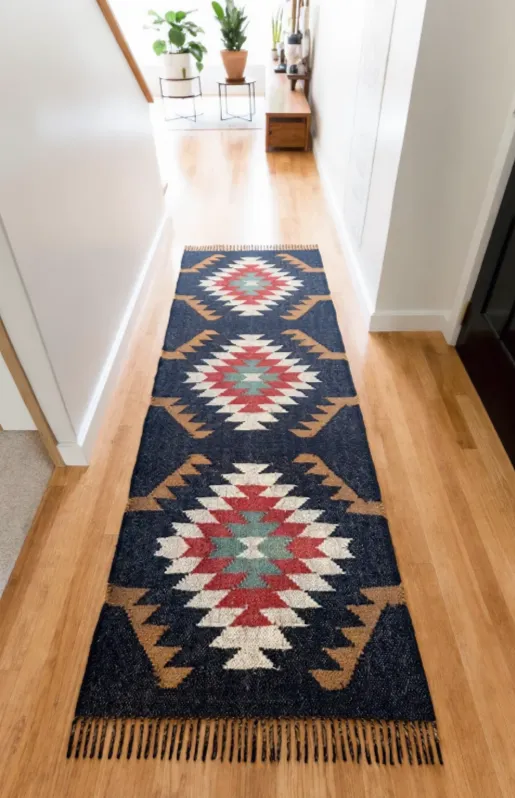
The hallway is simply a space that connects one room to another. It rarely receives the same attention as the living room or bedroom, even though it’s one of the busiest areas in the house.
That’s also why hallway carpets are often overlooked. Some assume they’re difficult to maintain, while others believe they’re only suited to large Western homes.
The reality is more practical. A hallway carpet isn’t about decorating an empty corridor. It’s about making one of the most frequently used spaces safer, quieter, and visually connected to the rest of the home. The question isn’t whether hallway carpets belong in Indian modern homes. It’s whether they’re chosen with designer homes in mind.
Why Are Hallways Different in Indian Homes Than in Most Design Guides?
Most hallway carpet advice is written for homes with wooden flooring, wall-to-wall carpeting and wider corridors. Indian homes often feature marble, granite or vitrified tiles, frequent barefoot movement and narrower passageways, making the choice of carpet size, material and construction far more important.
Before choosing a hallway carpet, understand how Indian homes are different.
- Hard flooring reflects more sound and feels cooler underfoot.
- Hallways are usually narrower than those shown in international design magazines.
- Many families walk barefoot indoors, increasing the need for comfort.
- Regular sweeping and mopping influence the type of carpet that works best.
How Indian Hallways Differ?
| Most International Homes | Many Indian Homes |
| Wooden flooring | Marble, granite or vitrified tiles |
| Wider corridors | Compact passageways |
| Wall-to-wall carpeting | Loose carpets or runners |
| Less barefoot movement | Barefoot walking is common |
A hallway carpet should solve the challenges of your home, not recreate someone else’s.
Can a Hallway Carpet Handle Everyday Indian Living?
Yes, provided it’s chosen for daily use rather than appearance alone. Dense handmade wool carpets and low-pile constructions generally perform better in busy hallways because they balance durability, comfort, and easier maintenance.
Think about how your hallway is actually used.
- Family members walk through it dozens of times each day.
- Guests experience it before entering any other room.
- Children, pets and luggage often pass through this space.
- It receives more continuous foot traffic than most bedrooms.
Choose Based on Daily Living
| Everyday Situation | Better Hallway Carpet Choice |
| Frequent barefoot use | Handmade wool carpet |
| High foot traffic | Dense, low-pile construction |
| Marble flooring | Textured handmade carpet with a rug pad |
| Homes with children | Patterned designs that disguise everyday wear |
| Narrow passage | Hallway runner with visible flooring on both sides |
The best hallway carpet isn’t the softest one. It’s the one that continues performing well after thousands of footsteps.
Which Hallway Carpet Actually Works in Indian Homes?
The right hallway carpet depends more on the shape of your hallway than the latest design trend. Width, traffic, flooring and surrounding décor should guide your decision before colours or patterns.
Start with the layout, not the catalogue.
- Narrow hallways usually benefit from runners.
- Wider entrance passages allow larger handmade carpets.
- Leave a visible border of flooring around the carpet instead of covering the entire hallway.
- Choose patterns that suit the visual length of the corridor.
Hallway Carpet Selection Guide
| Hallway Type | Recommended Choice |
| Narrow apartment hallway | Handmade runner |
| Wide entrance lobby | Large handmade carpet |
| Marble flooring | Wool hand-knotted carpet |
| Contemporary home | Modern or transitional patterns |
| Heritage-inspired interiors | Traditional handcrafted motifs |
A hallway carpet should frame the walkway, not fill every inch of it. Visible flooring around the edges often makes the space feel wider and more intentional. Choosing a handcrafted hallway carpet isn’t about decorating a corridor. It’s about creating a smoother transition between spaces, adding comfort where people walk the most and ensuring the first impression of your home feels just as thoughtful as the rooms beyond it.
