

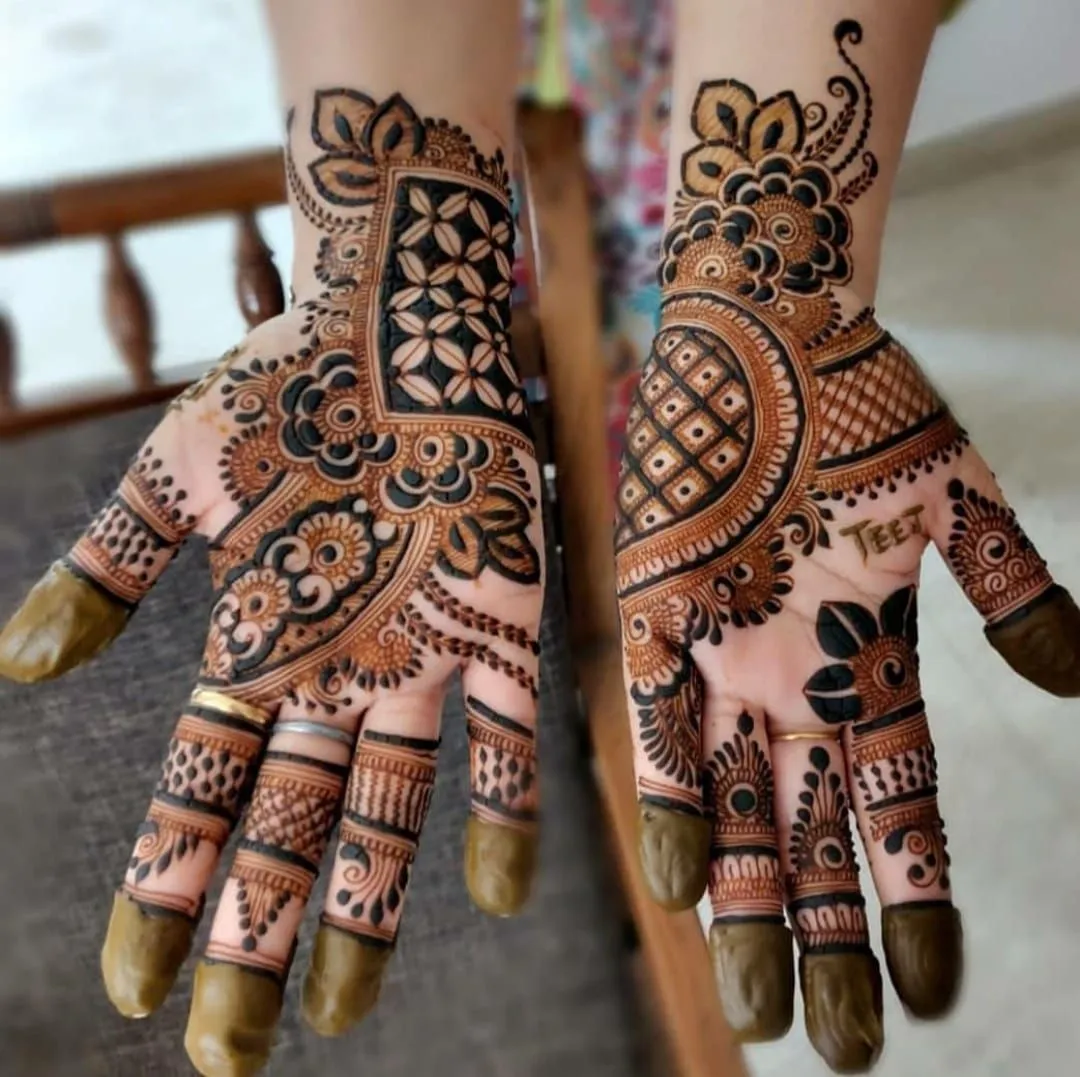
Indo-Western Mehndi Pattern designs have revolutionized the way we look at traditional body art, offering a sophisticated blend of cultural depth and modern minimalism. For many years, henna was defined by its density and full-coverage patterns that often hid the natural beauty of the skin beneath. However, as global cultures began to intertwine, a new aesthetic emerged that favored breathing room, geometric precision, and a focus on specific focal points. This fusion style is not just a trend; it is a reflection of the modern woman’s desire to honor her heritage while expressing her contemporary identity. Whether you are a bride looking for something unique or a guest at a festive celebration, this style offers a versatile canvas that suits any outfit or personality.
Imagine a young woman named Sarah preparing for her engagement party. She loves the intricate stories told by traditional Indian henna, but she also has a deep appreciation for the clean lines of Western jewelry. When she chooses an Indo-Western Mehndi Pattern, she is able to have the best of both worlds. Her artist creates a delicate “bracelet” design around her wrist using classic paisleys, but leaves the palm mostly clear except for a stunning, central mandala that looks like a piece of fine filigree. This approach ensures that her henna doesn’t clash with her designer gown or her diamond rings. Instead, the art enhances her overall look, acting as a permanent accessory that feels both ancient and refreshingly new.
The philosophy behind this fusion art lies in the concept of “less is more.” While traditional styles like Marwari or Pakistani henna are breathtaking in their complexity, they can sometimes feel heavy or overwhelming. The Indo-Western approach takes the most iconic elements of these styles—the peacocks, the lotus flowers, and the vines—and gives them room to shine. By using negative space strategically, the artist creates a high-contrast look that makes the dark henna stain pop against the natural skin tone. This technique is particularly effective for photography, as the individual motifs are clearly defined and easily visible from a distance.
The Artistic Evolution of the Indo-Western Mehndi Pattern
When we look back at the history of henna, we see that it has always been an evolving art form. The Indo-Western Mehndi Pattern is the latest chapter in this long history, born from the creative exchange between Eastern artists and Western fashion sensibilities. In the past, henna was often applied as a solid block of color on the fingertips or as a thick circle in the middle of the palm. Over centuries, these shapes became more refined and intricate. In the modern era, the influence of Western tattoo culture and architectural design began to creep into the world of henna, leading to the structured, clean, and often asymmetrical designs we see today.
One of the most recognizable features of this style is the “glove” or “jewelry” design. This involves creating patterns that mimic the look of rings connected to bracelets by delicate chains of dots or tiny flowers. It is a highly stylized look that appeals to those who want their henna to feel like a part of their fashion ensemble. The use of geometric shapes, such as perfect circles, triangles, and grids, is also a hallmark of this fusion. These sharp lines provide a beautiful contrast to the organic, flowing vines of traditional henna, creating a visual tension that is incredibly modern and chic.
Another significant shift brought about by the Indo-Western Mehndi Pattern is the use of varying line weights. In older styles, the lines were often uniform in thickness, which could result in a flat appearance. Modern fusion artists use a variety of cone tips to create everything from bold, thick outlines to microscopic details that look like they were painted with a single-hair brush. This layering of textures adds a three-dimensional quality to the art. When the henna is removed, the result is a rich tapestry of shades ranging from light orange to deep mahogany, giving the design a life and vibrancy that is truly captivating.
Key Visual Elements and Motifs
The visual language of this fusion style is built on several key elements that distinguish it from purely traditional forms. Firstly, there is the frequent use of the “Mandala” but with a modern twist. Instead of being a solid, filled-in circle, a modern mandala might be composed of thin, radiating lines and dots, creating a lace-like effect that feels light and airy. This central piece is often the anchor of the design, with smaller motifs echoing its shape across the fingers or up the arm. It serves as a focal point that draws the eye without cluttering the entire hand.
Floral motifs are also reimagined in the Indo-Western context. While the lotus and the rose remain popular, they are often depicted with a “shading” technique that mimics Western botanical sketches. Instead of solid filling, artists use tiny lines or “stippling” to create depth and shadow within the petals. This makes the flowers look more realistic and delicate. Additionally, Western elements like feathers, birds, or even personalized symbols like initials and dates are integrated seamlessly into the traditional vines. This customization makes each design deeply personal to the individual wearing it.
Negative space is perhaps the most critical component of the Indo-Western Mehndi Pattern. By leaving large areas of the skin bare, the artist allows the design to “breathe.” This technique is not about doing less work; it is about the careful curation of where the art should be. For example, a design might feature a heavy, intricate pattern on only one side of the hand, with the other side left completely empty or accented by a few simple dots. This asymmetry is a quintessentially Western design principle that, when applied to the ancient art of henna, creates a striking and avant-garde aesthetic that is perfect for the modern age.
Practicality and Versatility for Every Occasion
One of the reasons why this fusion style has gained such massive popularity is its incredible versatility. It is no longer reserved just for brides or major religious festivals like Eid or Karwa Chauth. Because the designs can be scaled up or down, they are perfect for casual gatherings, cocktail parties, or even as a temporary “tattoo” for a beach vacation. A simple, minimalist vine on the side of the foot or a delicate pattern on the back of the shoulder can add a touch of elegance to any look without requiring hours of sitting in a chair.
For brides, the Indo-Western approach offers a practical solution to the long application times associated with traditional henna. While a full bridal design can take six to eight hours, a fusion style can often be completed in half that time while still looking spectacular. This allows the bride to enjoy her festivities and spend more time with her guests. Furthermore, because these designs are less prone to smudging due to the use of negative space and finer lines, they are often easier to maintain during the drying process. It is a win-win situation for the modern, busy bride who values both style and convenience.
The adaptability of this style also means it works beautifully with a wide range of outfits. A traditional red lehenga looks stunning with a fusion design that bridges the gap between the heavy embroidery and the skin. Similarly, a sleek Western gown or a modern fusion outfit like a pant-saree is perfectly complemented by the clean lines of an Indo-Western design. It is this ability to transition between different cultural contexts that makes the style so enduringly popular across the globe, from the streets of Mumbai to the fashion runways of New York.
Technical Skills and Professional Expertise
Creating a high-quality Indo-Western Mehndi Pattern requires a significant level of skill and a deep understanding of the medium. Unlike traditional styles where the density can sometimes mask small errors, the open space of a fusion design leaves no room for mistakes. Every line must be crisp, every dot must be perfectly placed, and the symmetry must be impeccable. A professional henna artist spends years mastering the pressure of the cone to ensure that the flow of the paste is consistent. This is why it is so important to choose an artist who has a portfolio reflecting this specific style.
The preparation of the henna paste is also a science in itself. To achieve those fine, needle-thin lines, the paste must be incredibly smooth and free of any lumps. Most professional artists mix their own henna using high-quality powder sourced from regions like Rajasthan, which is known for its high dye content. They add essential oils like lavender, eucalyptus, or tea tree to not only enhance the color but also to provide a soothing, aromatic experience for the client. This dedication to quality is a key part of the EEAT parameters—Expertise, Experience, Authoritativeness, and Trustworthiness—that define a true professional in the industry.
When you sit down with an expert, they will often begin by assessing your skin type and your personal style. They will discuss the “aftercare” process with you even before they start, ensuring you know how to protect the design to get the darkest possible stain. This level of communication is what builds trust between the artist and the client. A true expert doesn’t just apply a pattern; they create a customized piece of art that is tailored to your body and your event. This professional approach ensures that the final result is not just a stain on the skin, but a beautiful, long-lasting memory.
Safety and Quality: Trusting Your Artist
In the world of henna, safety should always be the top priority. Unfortunately, the rise in popularity of body art has also led to the prevalence of “black henna,” which is not henna at all but a dangerous chemical mixture containing PPD (para-phenylenediamine). This chemical can cause severe allergic reactions, permanent scarring, and long-term health issues. A trustworthy artist who specializes in the Indo-Western Mehndi Pattern will always use 100% natural henna. They will be happy to tell you exactly what is in their paste and will often provide a sample for a patch test if you have sensitive skin.
Trustworthiness also comes from the artist’s knowledge of the science behind the stain. They understand that the henna dye, lawsone, needs time to oxidize and penetrate the skin layers. They will explain why the design looks orange at first and how it will deepen over 24 to 48 hours. By providing clear, honest information, the artist ensures that the client feels comfortable and well-informed. This transparency is a vital part of the professional relationship and is something every client should look for when booking a henna session for their big day or any special event.
Experience is another factor that cannot be overlooked. An experienced artist knows how to work with different parts of the body, understanding that the skin on the palms is much thicker and will take a darker stain than the skin on the arms or back. They can adjust their design and application technique accordingly to ensure a balanced and beautiful result. This level of insight only comes from years of practice and thousands of applications. When you choose an experienced artist, you are paying for their eye for detail, their steady hand, and their deep understanding of the art form’s nuances.
The Role of Shading and Depth in Modern Patterns
One of the most exciting developments in the fusion world is the use of shading to create depth. In the past, henna was mostly 2D, but modern artists have borrowed techniques from the world of fine art to create a 3D effect. By using a “brushing” or “stippling” technique with the henna cone, they can create gradients that make floral petals look like they are curving or overlapping. This adds a level of realism that was previously unheard of in traditional henna. It transforms a simple floral vine into a sophisticated work of art that captures the light and shadow of a real flower.
This shading is particularly effective when combined with bold, thick outlines. The contrast between the dark, solid lines and the soft, shaded interiors creates a visual “pop” that is incredibly appealing. It gives the design a structured yet delicate look. For example, a large rose might have thick outer petals that provide a strong frame, while the inner petals are shaded with fine lines to give it a soft, velvety appearance. This technique requires an immense amount of patience and control, as the artist must manage the drying time of different parts of the design to achieve the desired gradient.
Furthermore, the use of “white henna” or glitter accents is a Western addition that has become popular in the Indo-Western context. While white henna is not actual henna (it is a skin-safe adhesive or paint), it is often used to highlight parts of a traditional design for a more “bridal” or “glamorous” look. It allows for even more creativity, as the artist can add pops of color or shimmering highlights that match the client’s jewelry or outfit. This willingness to experiment with new materials while staying rooted in traditional patterns is what keeps the art form fresh and exciting for new generations.
Cultural Significance and Global Influence
While the Indo-Western Mehndi Pattern is a modern fusion, it is important to remember the deep cultural significance that henna holds. For thousands of years, it has been a symbol of joy, health, and good luck. In many cultures, the “Barakah” or blessing of the henna is an essential part of the transition into marriage. By choosing a fusion style, modern women are not rejecting these traditions; they are evolving them. They are finding ways to make these ancient blessings relevant to their lives today, creating a bridge between their ancestors’ customs and their own modern reality.
The global influence of this art form is evident in how it has been embraced by celebrities and fashion icons around the world. We see henna-inspired patterns on the runways of Paris and Milan, and in the music videos of global pop stars. This international exposure has helped to demystify henna and bring it to a wider audience. However, it is always best when this is done with respect for the art form’s origins. By learning about the history and the techniques behind the patterns, people from all backgrounds can appreciate the beauty of henna without losing sight of its cultural heart.
As we look to the future, it is clear that the world of henna will continue to grow and change. New technologies, like digital design tools, are allowing artists to experiment with patterns in new ways, while social media platforms allow for the instant sharing of ideas and inspirations. Yet, at its core, henna remains a deeply personal and tactile art form. The smell of the essential oils, the cool feeling of the paste on the skin, and the slow, meditative process of application are things that cannot be replicated by a machine. It is a human connection that spans across cultures and generations.
Finding Inspiration for Your Next Design
If you are looking for inspiration for your own design, the best place to start is by looking at the natural world around you. Many of the most beautiful fusion patterns are inspired by the shapes of leaves, the symmetry of flowers, and the patterns found in architectural tiling. You can also look to your own heritage and see if there are specific symbols or motifs that have meaning for you. A professional artist can help you take these ideas and translate them into a cohesive design that fits perfectly on your skin. Don’t be afraid to mix and match different elements to create something that is uniquely yours.
Social media platforms like Instagram and Pinterest are also treasure troves of inspiration. You can follow artists from all over the world to see how they are interpreting the fusion aesthetic. Look for designs that speak to you, whether it’s a bold, geometric sleeve or a tiny, delicate finger piece. When you find something you like, save the image to show your artist. This will give them a clear starting point for creating a custom design that meets your expectations. Remember, the best designs are a collaboration between the artist’s skill and the client’s vision.
Finally, consider the timing of your henna application. For the best results, you should have your henna applied two to three days before your event. This gives the stain enough time to reach its peak color. During the drying process, try to relax and enjoy the experience. It is a rare moment of stillness in the middle of what is often a very busy time. Treat your henna as a form of self-care and a celebration of your own beauty. When you look down at your hands and see a stunning Indo-Western Mehndi Pattern, you will know that you are wearing a piece of living history that is as unique and modern as you are.
square rangoli for diwali
maa tattoo new style english
पानाफुलांची रांगोळी
धनत्रयोदशी रांगोळी
फुलाची रांगोळी
