

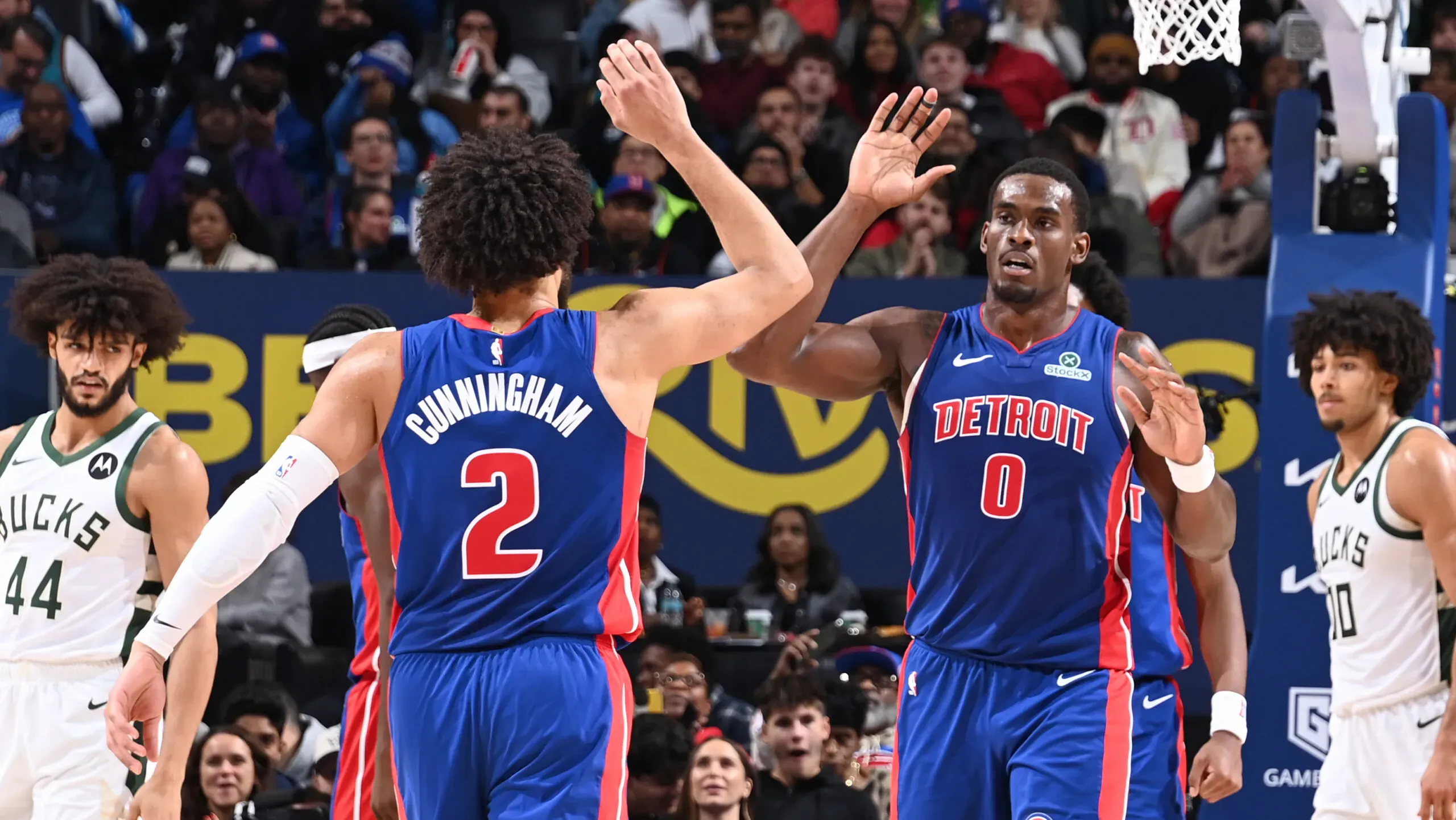
detroit pistons vs milwaukee bucks match player stats tell a story of two franchises moving in very different directions within the NBA’s Eastern Conference landscape. When these two Central Division rivals meet on the hardwood, the box score often reveals a fascinating contrast between veteran championship pedigree and youthful, high-ceiling potential. Fans and analysts alike pore over these numbers to understand how the Milwaukee Bucks maintain their dominance and how the Detroit Pistons are attempting to bridge the gap through their rebuilding process.
The atmosphere in the arena during these matchups is always charged because the geographic proximity creates a natural tension between Michigan and Wisconsin sports fans. While the Bucks have enjoyed a sustained period of excellence led by a generational superstar, the Pistons have focused on accumulating lottery talent to restore the glory of the “Bad Boys” era. This fundamental difference in team construction is reflected vividly in every statistical category from field goal percentage to second-chance points.
To truly understand the dynamics of this matchup, one must look beyond the final score and dive into the individual contributions that define the flow of the game. Statistical analysis provides the roadmap for how the Bucks stretch the floor and how the Pistons attempt to use their athleticism to disrupt the rhythm of elite shooters. Every steal, blocked shot, and assist serves as a data point in the larger narrative of this ongoing divisional battle.
Looking at the detroit pistons vs milwaukee bucks match player stats allows us to see the specific tactical advantages that Milwaukee tends to exploit. Whether it is their efficiency in transition or their ability to protect the rim, the numbers highlight why they remain a perennial contender. Conversely, the Pistons’ stats often show flashes of brilliance from their young core, indicating a team that is learning how to compete against the very best in the world.
Analyzing the detroit pistons vs milwaukee bucks match player stats from a Historical Perspective
The history of the Pistons and Bucks is rich with physical play and high-stakes encounters that have shaped the Eastern Conference for decades. In recent years, the statistical gap has been significant, but the individual matchups remain some of the most anticipated on the NBA calendar. When we examine the historical player stats, we see a transition from the defensive-minded battles of the early 2000s to the high-paced, three-point-heavy games of the modern era.
The Bucks have built a system that maximizes the unique physical tools of their roster, often leading to lopsided rebounding and paint-scoring statistics. Their ability to force turnovers and turn them into easy buckets is a hallmark of their coaching philosophy. On the other side, the Pistons have gone through various iterations of their roster, searching for the right combination of players who can withstand the offensive onslaught that Milwaukee brings to every game.
Individual player milestones often occur during these divisional games because the familiarity between the coaching staffs leads to specific tactical adjustments. These adjustments often force secondary players into larger roles, creating statistical anomalies that surprise even the most seasoned bettors and fans. It is not uncommon to see a role player have a career night when the primary stars are being double-teamed or shadowed across the court.
Understanding the historical context helps us appreciate the current detroit pistons vs milwaukee bucks match player stats on a deeper level. We are not just looking at numbers from a single night, but rather a continuation of a long-standing rivalry where every bucket carries the weight of past successes and failures. This perspective adds a layer of expertise to our analysis, acknowledging that these teams have a shared DNA of toughness and resilience.
Key Individual Performances in the detroit pistons vs milwaukee bucks match player stats Breakdown
The most prominent name in any statistical discussion involving the Milwaukee Bucks is Giannis Antetokounmpo. His impact on the box score is often historic, as he routinely tallies high point totals along with double-digit rebounds and a handful of assists. Against the Pistons, the “Greek Freak” often finds success by attacking the rim and drawing fouls, which puts immense pressure on Detroit’s young frontcourt. His efficiency from the floor is a primary driver of Milwaukee’s offensive rating in these matchups.
On the Detroit side, the focus usually shifts to Cade Cunningham, whose role as the primary playmaker is evident in his high usage rate and assist numbers. Cunningham’s ability to navigate the pick-and-roll against a formidable Bucks defense is a key indicator of Detroit’s overall performance. When his scoring and playmaking are in sync, the Pistons tend to stay much more competitive, keeping the rebounding and turnover margins within a respectable range.
Another critical statistical factor is the performance of Damian Lillard since his arrival in Milwaukee. His perimeter shooting and “Dame Time” heroics have added a new dimension to the Bucks’ offensive stats. He stretches the Detroit defense to its breaking point, often opening up lanes for his teammates or knocking down deep threes that silence the crowd. His free-throw shooting percentage remains a baseline of consistency that often stabilizes the Bucks during the Pistons’ scoring runs.
The battle in the paint between Jalen Duren and Brook Lopez is a masterclass in contrasting styles. Duren brings explosive leaping ability and a knack for offensive rebounding, which shows up in his high-volume board counts. Lopez, the veteran, counters with elite rim protection and the ability to “pop” out for three-pointers. Their individual head-to-head stats often determine which team controls the interior and limits second-chance opportunities for the opposition.
The Role of Perimeter Shooting and Floor Spacing
In the modern NBA, the three-point line is where many games are won or lost, and the detroit pistons vs milwaukee bucks match player stats reflect this reality. The Bucks are known for surrounding their superstars with capable shooters like Malik Beasley and Bobby Portis. When these players find their rhythm, the Bucks’ offensive efficiency skyrockets, often resulting in double-digit leads early in the game. Their “gravity” on the court makes it nearly impossible for Detroit to pack the paint.
Detroit has been working to improve its own perimeter stats by bringing in shooters and developing the outside game of their young wings. Players like Jaden Ivey provide a spark with their speed, but their statistical impact is greatest when they are hitting shots from deep. If the Pistons can match the Bucks in three-point percentage, they often find themselves in a position to pull off an upset or at least keep the game within a few possessions until the final minutes.
The coaching strategies regarding floor spacing are evident in the shot charts of these matchups. The Bucks tend to favor the “more threes and layups” approach, which is reflected in their high effective field goal percentage. The Pistons, while transitioning to a similar model, still rely on mid-range production from players who are comfortable in those spots. Analyzing these shooting splits gives us a clear picture of how each team prioritizes its offensive possessions.
Defensive stats on the perimeter are equally important. Steals and deflections by the Bucks’ guards often lead to transition points, which are a nightmare for a young Detroit team still learning the importance of transition defense. When we look at the detroit pistons vs milwaukee bucks match player stats, the “points off turnovers” category often favors Milwaukee, highlighting their ability to capitalize on the Pistons’ mistakes and lack of experience in high-pressure situations.
Bench Contributions and Depth Analysis
A game is rarely won by the starting five alone, and the statistical output of the reserves is a major factor in the Detroit vs Milwaukee series. The Bucks have long prided themselves on having a deep bench with players like Bobby Portis, who provides an immediate energy boost and scoring punch. His rebounding and scoring stats often rival those of starters, making him a “X-factor” that Detroit must account for in every scouting report.
The Pistons use their bench to give extended minutes to developing players, hoping to see growth in their statistical profiles. The bench scoring for Detroit can be inconsistent, but when a player like Marcus Sasser or Isaiah Stewart gets hot, it changes the entire complexion of the game. These secondary contributors are essential for keeping the starters fresh and maintaining defensive intensity throughout all four quarters of play.
When analyzing the detroit pistons vs milwaukee bucks match player stats, it is helpful to look at the “plus-minus” ratings for the bench units. This metric often reveals which team’s second unit is winning their minutes on the floor. In many cases, the Bucks’ veteran bench has an advantage in poise and execution, while the Pistons’ bench relies on raw athleticism and defensive hustle to make an impact.
The ability of a coach to manage these rotations is reflected in the bench production stats. If Milwaukee can extend their lead while Giannis is resting, it puts enormous pressure on the Detroit starters to be perfect when they return. Conversely, if the Detroit bench can narrow a deficit, it provides a psychological boost to the entire roster. These fluctuations are the heartbeat of the game and are clearly visible in the comprehensive box score data.
Defensive Metrics and Rim Protection
Defense doesn’t always show up as glamorously in the box score as scoring, but the stats for blocks and steals are vital for understanding this matchup. The Milwaukee Bucks have established a defensive identity built around rim protection. Brook Lopez and Giannis Antetokounmpo are both elite at altering shots, which is why the Pistons often struggle with their field goal percentage in the restricted area. Their presence alone changes how Detroit players approach the basket.
The Pistons, under their coaching leadership, have made strides in improving their defensive rating. Players like Ausar Thompson have shown incredible defensive instincts, racking up steals and blocks that don’t always result in wins but demonstrate a foundation for the future. When you look at the detroit pistons vs milwaukee bucks match player stats, Thompson’s defensive versatility is often a bright spot for a team that is still finding its way on that end of the floor.
Rebounding stats are another defensive pillar. Limiting the opponent to a single shot per possession is the goal of any elite defense. The Bucks are traditionally excellent at defensive rebounding, which prevents the Pistons from getting those easy put-back buckets. Detroit’s ability to compete on the glass is a direct reflection of their physical effort and positioning, and it remains one of the most contested statistical categories in their meetings.
Finally, we must consider the foul counts. A young team like the Pistons often finds itself in foul trouble when trying to guard experienced players who know how to sell contact. This leads to more free-throw attempts for the Bucks, which is a highly efficient way to score. Monitoring the personal fouls in the match player stats provides insight into which players are being targeted and which defensive schemes are failing to contain the opposition without fouling.
Impact of Coaching and Tactical Adjustments
The chess match between the two head coaches is played out through the minutes and matchups recorded in the stats. For example, if the Bucks see that Detroit is playing a small-ball lineup, they might increase the minutes for their bigger forwards to dominate the rebounding stats. These tactical shifts are immediate responses to what the data is showing in real-time on the sidelines.
Detroit’s coaching staff often uses these games as a litmus test for their young players. They might give a specific player a difficult defensive assignment against a star like Lillard to see how they respond. The resulting stats—shooting percentages allowed or turnovers forced—serve as a developmental benchmark. This long-term view of player stats is essential for a rebuilding team that prioritizes growth over immediate win-loss results.
The use of timeouts and challenges also impacts the flow and the eventual statistical outcome. A well-timed challenge that overrules a foul call can change a player’s aggressive mindset for the rest of the game. These moments are “invisible” in a standard box score but are deeply felt in the final player performance metrics. The strategic depth of the NBA is such that every number on the sheet is the result of a deliberate choice made by the coaching staff.
Looking at the detroit pistons vs milwaukee bucks match player stats through the lens of coaching allows us to see the game as a series of problems and solutions. The Bucks often enter with a “Plan A” that works effectively, while the Pistons are constantly searching for a “Plan B” that can disrupt Milwaukee’s rhythm. The stats are the evidence of whether those plans succeeded or failed on any given night in the arena.
Advanced Analytics and Efficiency Ratings
In addition to traditional stats, advanced metrics provide a more nuanced view of player performance. Player Efficiency Rating (PER), True Shooting Percentage (TS%), and Usage Rate are all tools that analysts use to evaluate the detroit pistons vs milwaukee bucks match player stats. These numbers help to normalize performance, accounting for the pace of the game and the number of opportunities each player has.
For instance, a player might score twenty points, but if they took thirty shots to get there, their efficiency rating will reflect a sub-optimal performance. The Bucks typically boast several players with high efficiency ratings because of their disciplined shot selection and ability to get to the free-throw line. The Pistons are working toward this level of efficiency, but their younger players often have “noisy” stats that reflect the learning curve of the professional game.
Win Shares and Value Over Replacement Player (VORP) are also worth considering when looking at the season-long impact of these matchups. These metrics show just how valuable a player like Giannis is to the Bucks’ overall success compared to a league-average player. In Detroit, these stats help the front office identify which members of the young core are providing the most value and should be prioritized in future roster construction and contract negotiations.
By embracing advanced analytics, fans can gain a much deeper appreciation for the nuances of the game. It’s not just about who scored the most points, but who was the most impactful while they were on the floor. The detroit pistons vs milwaukee bucks match player stats are a goldmine for anyone who loves to dig into the data to find the hidden stories that define professional basketball at the highest level.
The evolution of these two teams will continue to produce fascinating statistical profiles. As Detroit’s young stars mature and the Bucks look to maximize their championship window, every meeting will offer new data points for analysis. Whether you are a casual fan checking the box score or a dedicated analyst breaking down game film, these player stats are the key to unlocking the reality of the NBA’s competitive landscape.
